

Music production is one of those rare spaces where theory, technology, and genuine creativity can collide if you build the right on-ramp. This multi-lesson GarageBand unit for Year 8 is designed to do exactly that.
In this post, I share how the unit is structured, what resources are included, and how it can be adapted for different classrooms.
Setting the Stage
One of the biggest challenges in Year 8 music is the range of experience in the room. Some students may have studied piano or another instrument for years, while others have never played a note in their lives. Traditional composition tasks can widen that gap quickly, and I was not interested in designing another unit that quietly signals to half the room that they are not musical.
GarageBand on Mac changes that equation. Not because it simplifies music making, but because it separates the technical barrier from the creative barrier. When students can access the tools immediately, the real learning can begin.
This unit takes anywhere from 6 to 8 weeks to turn beginners into music producers. Done effectively, it guides students through building a complete original composition using MIDI and loops. Along the way they develop practical production skills while learning the music theory that supports composition.

The Set List: What Students Learn
Students use GarageBand to compose and produce an original piece of music that demonstrates understanding of musical elements and production techniques.
Students will:
- Record MIDI using musical typing and apply loops to build a layered composition
- Demonstrate understanding of timbre, pitch, texture, and structure through their creative decisions
- Apply music theory concepts including major scales, intervals, and chord construction to compose effective melodies and harmonies
- Reflect on how music production technology shapes accessibility and creative possibility
Laying Down the Tracks: How the Unit Runs
Reproduce Before You Create
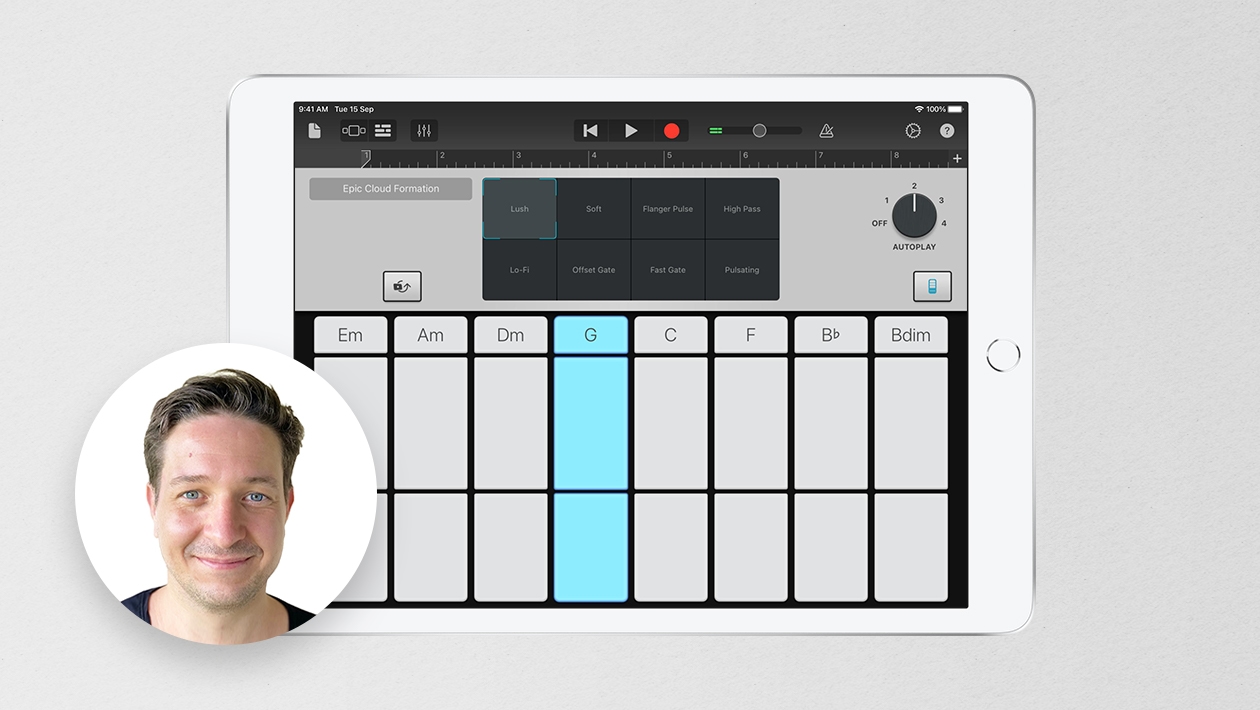
Students begin by rebuilding a demo track that I created. The resource pack includes a zipped GarageBand template project and an MP3 demo so students can hear the target before they attempt it.
This stage builds confidence with the software environment. Students learn MIDI recording, Apple Loops, smart instrument features, arpeggiator presets, and the Arrangement Track for structuring sections such as intro, verse, chorus, and bridge.
It also serves as a useful starting point for teachers who may be new to GarageBand and want to understand how loops and MIDI can work together. See the attached GB Template Lesson slides for guidance.
Theory in the Mix
Music theory is not taught as a separate block. Instead it is woven directly into the production process.
When students build chord progressions we explore major scale formulas and chord construction. When a melody is not working we discuss intervals and how they shape melodic movement.
Alongside the practical work, students complete structured theory activities that reinforce these concepts. Lessons move between written exercises, classroom instruments, and GarageBand so that theory ideas are immediately applied in sound.
The GarageBand project sits within a broader unit exploring how music is created and recorded. Alongside the production work, students also engage with slideshow lessons and activities on the evolution of music recording technology and the development of the modern recording industry.
We explore how multitrack recording emerged, how studios shaped the sound of popular music, and how digital production tools have dramatically lowered the barrier to entry for music creators. These discussions help students understand that the tools they are using in GarageBand are part of a much larger story about technology, creativity, and access.
Hit Record: Original Composition
Once students have rebuilt the demo track, they begin creating their own compositions. Students choose a style that interests them, such as pop, video game music, or trailer music, and apply the same production techniques while making their own creative decisions.
Headphones are essential at this stage of the process.
Acoustic vs Digital: A Listening Exercise
As an extension activity, I record real audio versions of selected parts such as piano, bass, and occasionally vocals, alongside the MIDI and loop-based versions.
Students compare the timbre of acoustic recordings with the digital versions. This creates a meaningful discussion about how recording technology has changed who can create music and how accessible music production has become.
Playback: What I Learned From Running This
What surprised me most was how effective the reproduce-first structure was for students who usually struggle with open-ended creative tasks. The template gives them a foothold in the software, and once they understand the process they begin experimenting confidently.
The timbre comparison activity also produced some of the most engaged discussions I have had in a music classroom. Students who are already passionate about music dive deeply into the technical aspects, while others connect through the broader conversation about technology and creativity.
One area I continue refining is the mixing stage. Students tend to rush it. I now build deliberate pauses where they must listen carefully and make active mixing decisions before moving forward.
Producer’s Notes: Tips for Your Own Classroom
For beginners, start with loops before moving to musical typing. This gives students an early success experience.
Teach the Arrangement Track explicitly. Many beginners ignore it, but it is the difference between a simple loop and a structured composition.
Arpeggiator presets are an excellent equaliser. They allow students with limited keyboard technique to produce rhythmically complex parts.
Apple Classroom is also extremely useful for monitoring student screens and showcasing examples of student work instantly.
Making Progress Visible
The resource pack also includes a proficiency scale created in Freeform. I print this as a poster and display it during the unit.
It mirrors the marking rubric but uses language students can understand. I refer to it regularly during lessons so students can see what progress looks like and celebrate moving to the next stage. It helps make the success criteria visible and supports a positive creative classroom culture.

Additional Support Resources
I have also created a series of video tutorials that walk through the process of setting up and building this project in GarageBand. These were originally produced as additional support for students with learning or processing needs who benefit from being able to revisit instructions step by step at their own pace.
Please note that the version demonstrated in the videos is slightly simplified compared to the full process outlined in the GB Template Lesson slides included in the resource pack. The goal of the videos is to provide a clear and accessible pathway for students who need extra scaffolding while still allowing teachers to extend the project further using the full lesson materials. The video walkthrough can be found
The Final Mix: Key Takeaways
- The unit is designed for Year 8 but can be adapted across multiple year levels.
- Reproducing a guided project first builds confidence before students begin creating independently.
- Music theory is integrated into the making process rather than taught in isolation.
- The timbre extension opens meaningful discussion about technology, creativity, and accessibility.
- How do you handle the gap between students with formal musical training and those without in a composition unit?
I am always interested in hearing how other educators approach this challenge. If you have found structures or tools that support both groups effectively, I would love to hear about them.
Check out the full Lindisfarne customer success story at http://apple.co/lindisfarne-story







Attach up to 5 files which will be available for other members to download.